
Webinars generate registrations, attendees, and follow-up requests—but those signals rarely explain intent, readiness, or next-best action. A webinar lead scoring tool turns webinar platform data into a structured qualification profile that can be routed, prioritized, and compared across events and topics.
This tool scores leads using inputs such as registration data, attendance behavior, poll responses, chat/Q&A themes, and post-webinar actions. The output is a consistent, explainable scoring model that helps separate buyers from browsers and helps marketing and sales focus on the right follow-up.
Typical Features and Functions
The AI Advantage for Tool Owners
- Converts webinar participation into intent and readiness signals (beyond attended vs. not attended)
- Scores poll questions to identify problem type, urgency, and buying stage
- Creates consistent scoring logic across webinars so outcomes can be benchmarked by topic and audience
- Produces follow-up recommendations that align to role, maturity level, and stated constraints
A traditional webinar follow-up tool can:
- Track registrations, attendance, duration, and key CTA clicks as engagement indicators
- Segment leads by webinar, topic, industry, or persona based on form fields
- Trigger simple automations such as alerts, email sequences, or task creation in CRM
- Create account-level rollups when multiple contacts attend from the same company
An AI-based webinar scoring tool offers additional benefits for the user:
- Extracts intent themes from Q&A, chat, and open text (e.g., timeline pressure, scope, barriers) and applies custom scoring
- Assigns buyer-stage labels using language and behavior patterns (early research vs. active evaluation)
- Recommends next actions (route to sales, nurture track, partner handoff, or long-cycle education)
- Normalizes scoring across webinars so results remain comparable as topics and formats change
Application Examples
The Problem: Attendance is often treated as a single signal, even though joining late, leaving early, and re-entry behavior can represent different levels of intent.
The Solution: Attendance patterns are weighted into a behavioral score that distinguishes casual viewers from active evaluators.
The Problem: The strongest buying signals often appear in questions, but they are rarely categorized or scored consistently.
The Solution: Q&A and chat content is analyzed and mapped to intent categories (implementation, pricing, timeline, constraints) that raise or lower readiness.
The Problem: Webinar polls frequently generate interesting “peer context,” but they do not reliably differentiate buyer readiness.
The Solution: Polls are structured around maturity, scope, resourcing, and timing so responses can be used directly in scoring logic.
The Problem: Multiple attendees from one company can signal a buying committee, but most systems treat each registrant as an isolated lead.
The Solution: Scores roll up to the account level to flag multi-stakeholder evaluation and route the right follow-up owner.
The Problem: Post-webinar behavior (resource downloads, tool usage, meeting requests) is often tracked separately from the event itself.
The Solution: Post-webinar actions are incorporated into the same scoring model so the webinar becomes a measurable step in qualification.
The Problem: Webinar programs produce many disconnected datasets, making trend analysis and prioritization inconsistent by topic.
The Solution: A standardized scoring framework enables comparisons across webinars, topics, and quarters—supporting better planning and follow-up.
Possible Use Cases
*Score intent using questions, attendance behavior, and follow-up actions aligned to buying stage
*Route product-qualified attendees to sales while placing early-stage leads into topic-based nurture
*Identify scope and urgency from Q&A language (timeline, compliance pressure, internal staffing gaps)
*Recommend the right next step such as consultation, assessment, or educational path
*Detect risk- and compliance-driven urgency signals across poll responses and Q&A themes
*Flag accounts showing multi-role participation (security, IT, legal, procurement) for faster routing
*Score for readiness indicators such as audit timing, implementation maturity, and resource constraints
*Segment by problem type (training, internal audit, tooling, certification) to tailor follow-up paths
*Convert webinar engagement into sponsor-ready lead grading with standardized definitions
*Provide sponsor reporting that explains scoring drivers without exposing sensitive attendee text
*Identify when leads should be routed to internal sales vs. partners based on fit and geography
*Generate partner-specific summaries that reduce handoff friction and improve follow-up consistency
Example: Webinar Scoring Tool
Webinars are a great way to collect lots of information about potential leads. Companies can use signup forms to collect contact information and demographic data from registrants. Webinar hosting platforms provide additional data such as attendance levels and engagement activity. Hosts can also create real-time polls during the webinar to capture additional consumer data and interest points. Although webinars often have a wealth of information to offer companies who host them, they often lack a clear tool to efficiently make sense of that data and suggest actionable next steps.
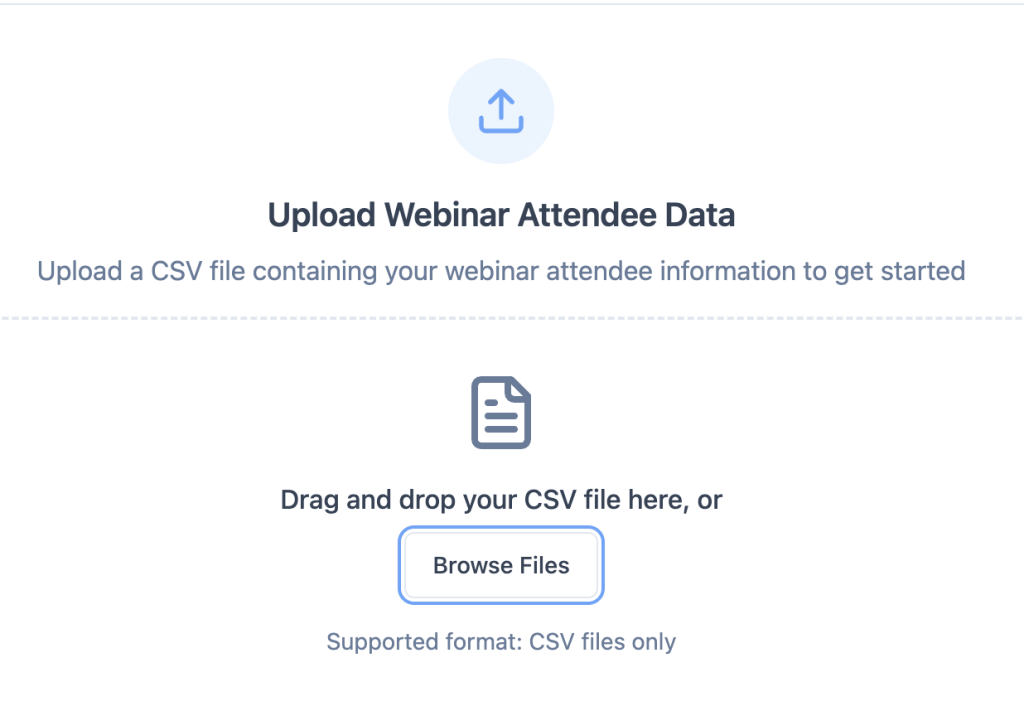
We created a webinar scoring tool that allows users to upload any csv file with webinar attendee information and assign scoring values to any field. They can simply add their csv that they’ve exported from their chosen webinar hosting platform.
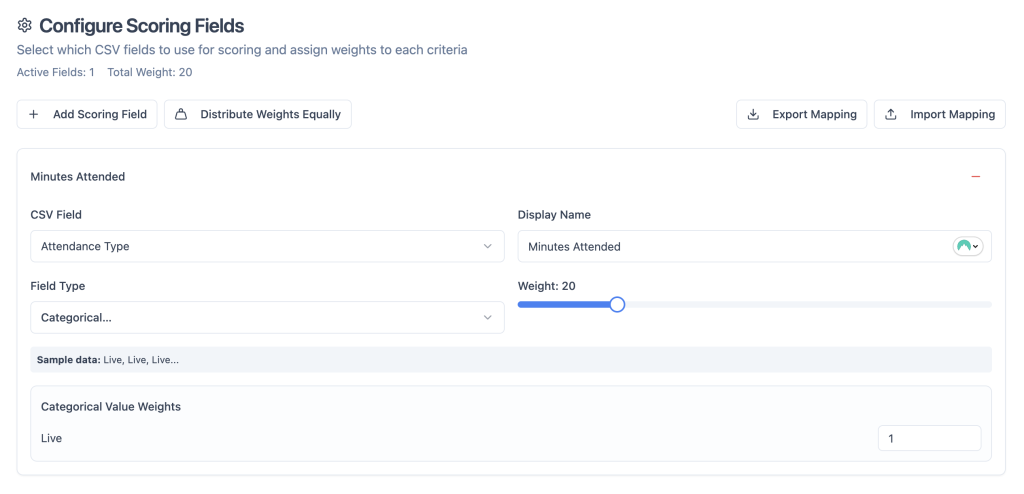
Users then select the columns they would like to prioritize for scoring and weight them appropriately. This tool then assigns a priority score to each lead and allows users to quickly identify the leads they need to prioritize for follow up.
Existing Core Capabilities in This Tool Template
- Webinar platform data ingestion (registrations, attendance patterns, poll responses, Q&A/chat exports)
- Configurable scoring rules and weighting (per webinar, per topic, and cross-program)
- AI-based text analysis for open responses, Q&A, and chat with intent/theme tagging
- Account-level rollups when multiple contacts engage from the same organization
- Lead routing recommendations and workflow triggers (sales alert, nurture track, partner handoff)
- Score explanations and summaries (“drivers” behind the score) for sales and marketing review
- Reporting by webinar, topic, and time period to compare performance and optimize future events
- Export and integration-ready outputs for CRM and marketing automation systems