
An embeddable, AI-driven data aggregation tool designed to collect, analyze, and present real-time industry data while simultaneously qualifying and capturing high-intent leads directly from your website. The tool transforms anonymous visitors into engaged participants by delivering personalized insights in exchange for meaningful data inputs.
Typical Features and Functions
The AI Advantage for Tool Owners
- Enables the capture of richer, more structured lead data that goes beyond basic contact information
- Increases engagement and completion rates with real-time results
- Automatically identifies intent signals and supports more accurate lead scoring and segmentation
- Continuous improvement of question flow, messaging, and overall performance
This data aggregation tool uses AI to analyze real-time data and create user-friendly reports to deliver value to both users and site owners. Core features typically include:
- Multi-step questionnaires or data input forms
- Real-time aggregation and normalization of user-submitted data
- Instant generation of personalized results, benchmarks, or reports
- Gated or partially gated results to encourage email submission or account creation
- Optional comparison against industry averages or peer groups
- Structured data output for CRM, marketing automation, or analytics platforms
An AI-based data aggregation tool offers additional benefits for the user:
- More relevant, personalized insights
- Faster, actionable results and recommendations (instead of waiting for reports or follow-ups)
- Context and meaning, not just raw data as AI translates aggregated data into clear explanations, comparisons, and implications
Application Examples
Problem: Organizations struggle to understand how their compensation compares to peers.
Solution: Aggregate anonymous salary data and deliver instant benchmarking insights in exchange for role-specific details.
Problem: Buyers are unsure if their current tools are sufficient.
Solution: Compare user inputs against aggregated peer data to show strengths and weaknesses.
Problem: Companies lack clarity on their compliance posture.
Solution: Use adaptive questions to assess readiness and provide a scored summary with next-step recommendations.
Problem: Organizations want insight into emerging trends but lack reliable data.
Solution: Aggregate anonymized inputs into live trend reports while capturing contributor information.
Problem: Businesses don’t know where they stand operationally.
Solution: Aggregate responses into a maturity model that highlights gaps and improvement areas.
Problem: Vendors struggle to identify buyers ready to purchase.
Solution: Score users based on inputs and surface readiness indicators for sales follow-up.
Possible Use Cases
*Collect role-specific data to benchmark tool usage, spend, or adoption maturity
*Identify high-intent buyers based on feature gaps or readiness scores
*Diagnose operational or strategic challenges through interactive assessments
*Use aggregated results to prioritize high-value prospects for follow-up
*Aggregate compensation, hiring, or benefits data to deliver instant benchmarks
*Capture qualified leads from HR leaders actively evaluating workforce changes
*Evaluate process maturity, efficiency, or technology adoption levels
*Identify organizations most likely to invest in operational improvements
*Assess organizational readiness across standards or regulations using adaptive questions
*Surface companies with compliance gaps and route them to relevant solutions
*Collect anonymized operational, staffing, or technology data for benchmarking
*Qualify leads based on organizational size, complexity, and immediate needs
Example: Job Salary Report
Quality management professionals and employers are interested in understanding real-world compensation trends within their industry to help with new job searches or developing own compensation packages. We created a job scraping AI tool to aggregate the most up-to-date salary data for this particular industry. By contributing a small amount of information, users can gain access to current salary benchmarks by role, experience level, and location—making it easier to evaluate job offers, plan career moves, or set competitive pay ranges. The tool replaces outdated static reports with continuously updated insights, giving users timely, relevant data they can actually use to make informed decisions.
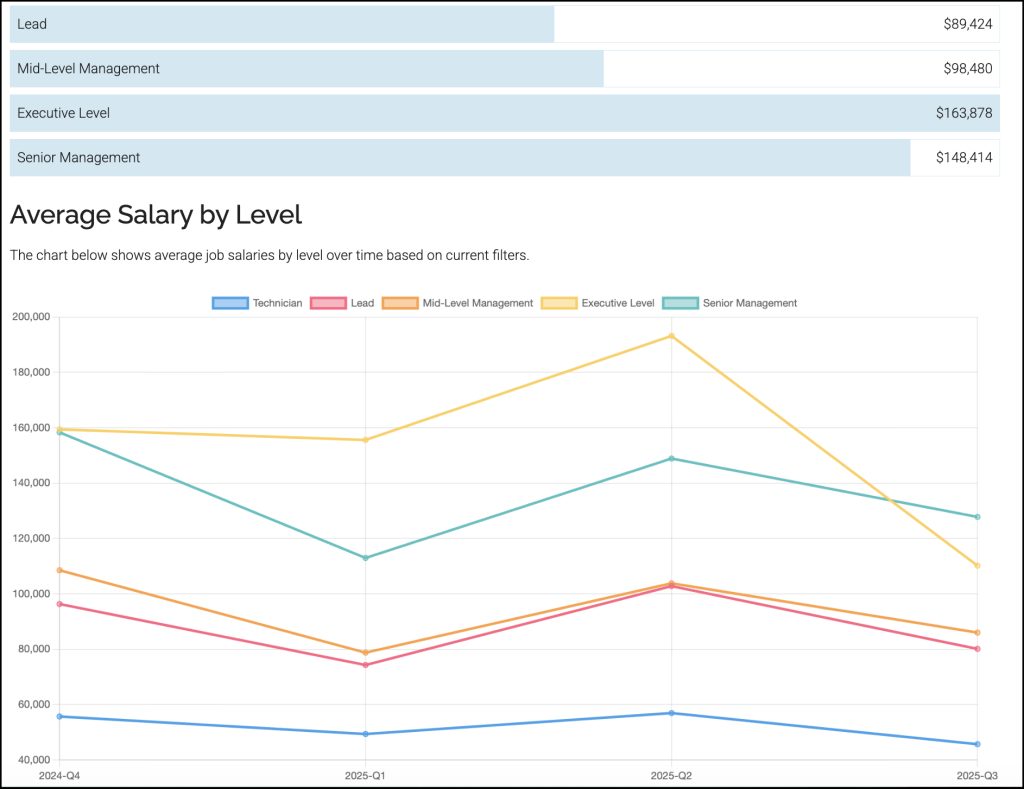
This report looks into salary trends for quality management roles, from executive and C-suite positions to entry-level technicians. Here’s what you’ll find:
Industry Comparisons: Discover how compensation varies across industries, highlighting sector-specific trends and opportunities.
Salary Ranges by Position: Explore compensation spectrums for various roles, showcasing the financial progression within the quality management field.
Geographical Variations: Understand how location impacts earning potential with insights into regional salary differences.
This research tool was offered 100% free, an attractive hook for quality professional job seekers, employers seeking benchmark comparisons, or researchers and analysts interested in leveraging data to study trends and better understand the quality management job market.
Existing Core Capabilities in This Tool Template
- Fully embeddable, responsive design for web deployment
- Configurable question flows with conditional logic
- Secure data capture and anonymization options
- Real-time reporting and result generation
- CRM and marketing automation integrations
- Custom branding and messaging controls
- Scalable architecture to support multiple industries and use cases